

Herbalism's Digital Bloom
Humans have long used plants for healing. This practice, herbalism, is part of nearly every culture's history. Today, people are seeking alternatives and complements to conventional medicine, leading to a resurgence in herbalism. Technology is now intersecting with this ancient wisdom.
Some initially doubted AI's role in herbalism, questioning if algorithms could grasp the complex chemistry and subtle aspects of plants. Applying AI to a practice rooted in intuition and tradition felt like a betrayal to some. However, the conversation is changing. AI is seen not as a replacement for traditional knowledge, but as a tool to enhance our understanding and use of plant power.
Standardization has always been a major challenge in herbalism. Plant potency varies greatly due to growing conditions, harvest time, and preparation, making consistent dosing and reliable results difficult. AI can help by analyzing large datasets to find patterns humans might miss.
AI-Driven Plant Identification
Accurate plant identification is essential for safe herbalism. Misidentifying a plant can lead to serious consequences, including poisoning. AI is significantly improving our ability to identify plants quickly and accurately. Apps like PlantNet, a collaborative project involving research institutions, and iNaturalist, a joint initiative of the California Academy of Sciences and the National Geographic Society, are leading this advancement.
These apps use image recognition. You take a photo of a plant with your smartphone, and the app compares it to a large database of images to suggest an identification. PlantNet has an accuracy rate of about 89% for common species, though this varies with photo quality and plant rarity. iNaturalist uses a community of experts to verify identifications, adding another layer of accuracy.
This technology helps foragers quickly and confidently identify edible and medicinal plants. However, AI is not infallible. Always verify an AI's suggestion with a trusted field guide or an experienced herbalist. Never consume a plant based solely on an app's identification. Use the app as a starting point, not a final answer, as mistakes can be dangerous.
- PlantNet: Collaborative project focused on plant identification through image recognition.
- iNaturalist: Joint initiative leveraging community verification for accurate plant identification.
- Accuracy Variance: Identification accuracy depends on image quality and plant rarity.
Personalized Remedy Recommendations
AI is making it possible to choose herbal remedies tailored specifically to you, rather than based on general ailments. Algorithms can analyze individual health data, including genetic predispositions, lifestyle, medical conditions, and gut microbiome composition, to suggest personalized herbal remedies. This moves beyond the 'one size fits all' approach common in conventional medicine and some traditional herbalism.
For example, someone with a genetic variant affecting how they metabolize compounds might need a different dosage or herb. AI can account for these nuances, optimizing treatment effectiveness and minimizing adverse effects. However, this personalization requires access to sensitive personal data, raising privacy concerns. Developing ethical AI frameworks and strong data security is essential.
AI is a tool that offers data-driven insights to inform and enhance a practitioner's judgment; it does not replace the practitioner-patient relationship. A skilled herbalist considers the whole person—their emotional state, environment, and story. This approach shifts from generalized advice, like "chamomile for anxiety,’ to nuanced recommendations, such as ‘a specific chamomile preparation, adjusted for your metabolic profile and combined with lavender, to address your specific anxiety symptoms."
Optimizing Tincture Creation
Tincture making, extracting medicinal compounds from herbs with alcohol or solvents, is an art and a science. Numerous variables influence the final potency and quality. AI can assist by optimizing extraction times, solvent ratios, and ingredient combinations for specific effects.
Some tools predict optimal extraction parameters based on an herb's chemical composition. By analyzing compound solubility data, AI can suggest the most effective solvent and extraction time to maximize desired constituents. AI can also analyze a herb batch's chemical profile and adjust the process for variations in growing conditions and harvest time.
This field is early, and more research is needed. We do not yet fully understand all chemical interactions during extraction. However, initial results are promising. AI tools could help herbalists create more potent, consistent, and effective tinctures. Traditional methods and experienced judgment remain crucial.
Predictive Herbal Interactions
A significant potential benefit of AI in herbalism is identifying potential interactions between herbs and
AI can help bridge this gap by analyzing vast databases of drug and herb interactions, identifying potential risks and contraindications. The challenge, however, is the sheer complexity of the task. Herbs contain hundreds of different chemical compounds, many of which have not been fully studied. Furthermore, the effects of herbs can vary depending on the individual, their genetics, and their overall health status. The National Center for Complementary and Integrative Health (NCCIH) is actively funding research in this area, but progress is slow.
It is absolutely critical to emphasize that AI-powered interaction checkers are not a substitute for professional medical advice. Always consult with a qualified healthcare professional – ideally one who is knowledgeable about both herbal medicine and conventional pharmaceuticals – before combining herbs with medications. These tools are meant to be used as a starting point for discussion, not as a definitive answer. The potential for serious adverse effects is real.
Potential Pharmaceutical Interactions of Common Herbs (Qualitative Assessment - 2026)
| Herb | Primary Actions | Pharmaceutical Class of Concern | Interaction Risk Level |
|---|---|---|---|
| St. John's Wort | Antidepressant, Nervine | Antidepressants, Immunosuppressants, Blood Thinners, Oral Contraceptives | High Risk |
| Ginger | Anti-inflammatory, Digestive Aid | Blood Thinners, Diabetes Medications | Moderate Risk |
| Turmeric | Anti-inflammatory, Antioxidant | Blood Thinners, Diabetes Medications | Moderate Risk |
| Chamomile | Relaxant, Sleep Aid | Blood Thinners, Sedatives | Low Risk |
| Echinacea | Immune Support | Immunosuppressants | Moderate Risk |
| Garlic | Cardiovascular Support, Immune Booster | Blood Thinners, HIV Medications | High Risk |
| Peppermint | Digestive Aid, Muscle Relaxant | Antacids, Medications affecting Gastric pH | Low Risk |
| Lavender | Relaxant, Anxiolytic | Sedatives, Blood Pressure Medications | Low Risk |
Illustrative comparison based on the article research brief. Verify current pricing, limits, and product details in the official docs before relying on it.
AI and the Future of Herbal Research
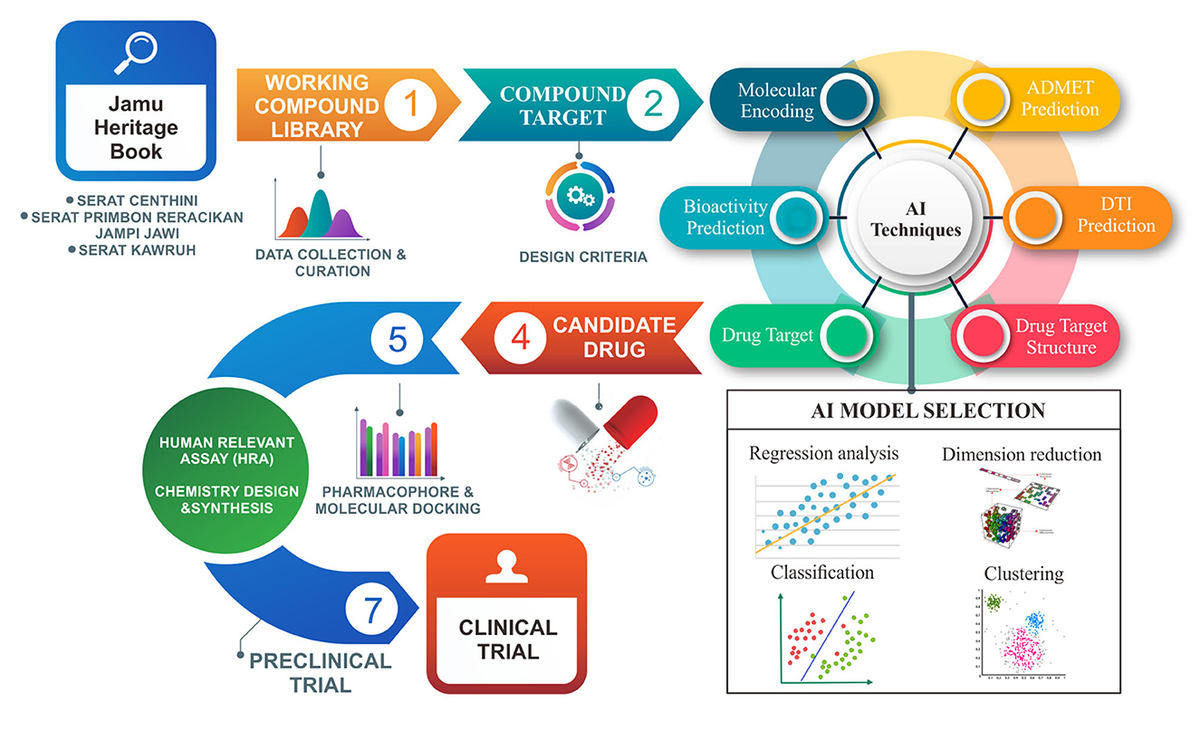
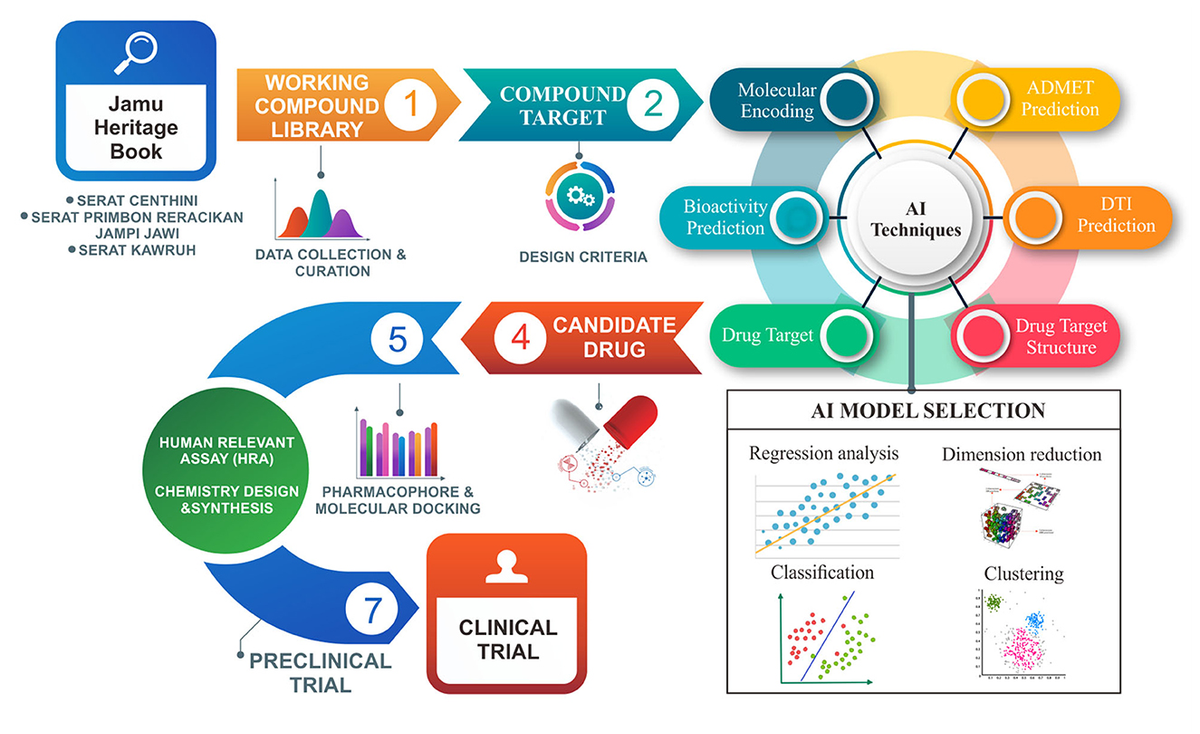
AI and machine learning are poised to accelerate herbal research at an unprecedented pace. For centuries, knowledge of herbal medicine has been passed down through oral tradition and written texts. Now, AI can analyze vast amounts of data from these sources, identifying patterns and connections that humans might miss. This includes ancient Ayurvedic texts, Traditional Chinese Medicine (TCM) formularies, and centuries of ethnobotanical records.
AI can also accelerate the process of identifying new bioactive compounds and uncovering hidden therapeutic properties of herbs. By analyzing the chemical composition of plants and correlating it with their traditional uses, AI can pinpoint promising candidates for further research. It can then be used to model complex biological systems and predict the effects of herbal remedies, reducing the need for costly and time-consuming laboratory experiments.
Imagine an AI algorithm sifting through thousands of scientific studies, identifying subtle correlations between herbal treatments and patient outcomes. Or an AI-powered tool predicting the synergistic effects of combining different herbs. These are not far-fetched scenarios. AI is already being used to analyze genomic data and identify potential drug targets, and the same principles can be applied to herbal medicine. The future of herbal research is undoubtedly intertwined with the advancement of artificial intelligence.
Finding Trustworthy Digital Herbalists
The rise of digital herbalism has brought with it a proliferation of information, not all of which is accurate or reliable. It can be challenging to discern between qualified practitioners and those with limited training or experience. Misinformation is rampant, and unqualified individuals may offer dangerous advice. It’s more important than ever to be discerning about your sources.
Look for herbalists who have completed a comprehensive training program from a reputable school. Certifications from organizations like the American Herbalists Guild (AHG) are a good indicator of professional standards. Check their experience and areas of specialization. Do they have a strong understanding of both traditional and scientific aspects of herbal medicine? Are they transparent about their qualifications and approach?
Resources like Facebook groups dedicated to herbalism can be helpful for finding practitioners, but exercise caution. As noted on facebook.com, you may have better luck searching for an 'herbalist' rather than a 'witch doctor' if you are seeking homeopathic or naturopathic medicine. Always verify their credentials and read reviews from other clients. Trust your intuition. A qualified herbalist will be happy to answer your questions and provide you with evidence-based information. Be wary of anyone who makes extravagant claims or promises miracle cures.
The Limits of Automation
Despite the incredible potential of AI, it’s crucial to acknowledge its limitations. AI is a tool, and like any tool, it’s only as good as the data it’s trained on and the user who wields it. It cannot replace human intuition, experience, and a deep understanding of plant medicine. Herbalism is not simply about identifying chemical compounds and prescribing remedies; it’s about building a relationship with the plants and understanding their energetic properties.
Each patient is unique, with their own individual needs and circumstances. A skilled herbalist will consider the whole person – their emotional state, their lifestyle, their environment – and tailor the treatment accordingly. AI can provide valuable insights, but it cannot replicate the nuanced judgment of a human practitioner. It cannot feel the energy of a plant or sense the subtle imbalances within a person’s system.
Critical thinking and skepticism are essential. Don’t blindly accept the recommendations of an AI algorithm. Question the data, consider the context, and trust your own intuition. AI is a powerful ally, but it should be used to enhance, not replace, the art and science of herbalism. The human connection remains at the heart of effective healing.
No comments yet. Be the first to share your thoughts!