
The danger of guessing in the woods
I've seen more people out in the local woods lately, baskets in hand, looking for a way to bypass the grocery store. It's great to see people reconnecting with the land, but the hospital reports are worrying. Poisonings are up because people are guessing instead of knowing. If you're going to eat from the dirt, you have to be right every single time.
The appeal is understandable. Imagine crafting a soothing tea from herbs you’ve identified yourself, or supplementing your meals with nutrient-rich wild greens. However, the natural world isn’t always what it seems. Many edible plants have dangerous look-alikes, and even experienced foragers can make mistakes. The consequences of misidentification can range from a mild stomach upset to severe organ damage, and even death.
Modern technology offers some assistance, with plant identification apps becoming increasingly popular, but these tools are far from perfect. They are aids, not replacements for solid botanical knowledge. Relying solely on an app can create a false sense of security, leading to potentially dangerous choices. Accurate identification requires a multi-faceted approach – careful observation, a thorough understanding of plant characteristics, and a healthy dose of skepticism.
Foraging isn’t just about knowing what a plant is; it’s about knowing where it grows, when it’s safe to harvest, and how to differentiate it from its poisonous cousins. Respect for the plant kingdom is paramount. A little humility and a lot of research are your most important tools when venturing into the wild.
Why I don't trust identification apps
The promise of artificial intelligence in plant identification is undeniably exciting. Researchers in Borneo, as documented in a study published by pmc.ncbi.nlm.nih.gov, are exploring deep learning models to automate the identification of medicinal plant species in natural environments. Similarly, apps like "Medicinal Plant Identifier" available on Google Play, aim to put this power in your pocket.
These apps match your photos against a database. They're getting better, but they fail in the field. A bit of shade or a blurry lens is enough to make the software mistake a toxic leaf for a salad green. I don't trust my liver to an algorithm that can't handle a cloudy day.
Plant variation also presents a challenge. The same species can look quite different depending on its age, growing conditions, and even the time of day. An app trained on images of a mature plant might struggle to recognize a young seedling. The training data itself is also key – if the app hasn’t been exposed to a wide range of variations for a particular species, its accuracy will suffer.
I've seen users confidently misidentify plants based solely on app suggestions, believing the technology is infallible. This is a dangerous mindset. These apps are best used as a starting point for identification, always followed by careful verification using multiple sources and, ideally, guidance from an experienced forager. Think of them as a helpful suggestion, not a definitive answer.
- Accuracy is hit-or-miss outside of perfect lab conditions.
- Image quality matters: Clear, well-lit photos are essential.
- Plant variation is key: Consider the plant's age and growing conditions.
- Training data limitations: Apps are only as good as the data they’re trained on.
Essential Field Guides for Safe Foraging in 2026

Comprehensive coverage of wildflowers in the Western Region of North America · Detailed descriptions and illustrations for identification · Authored by the National Audubon Society, a trusted name in nature guides
This guide offers clear visuals and detailed descriptions crucial for distinguishing medicinal plants from their toxic look-alikes, empowering beginners to forage safely.

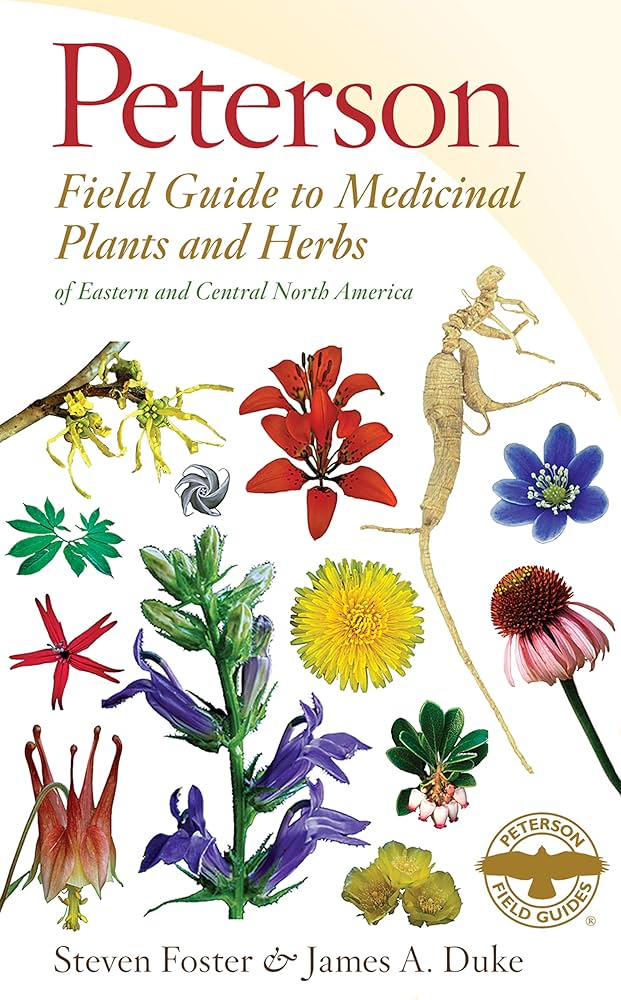
Focuses on edible wild plants found in Eastern and Central North America · Includes illustrations and descriptions for easy identification · Part of the reputable Peterson Field Guides series
This guide offers clear visuals and detailed descriptions crucial for distinguishing medicinal plants from their toxic look-alikes, empowering beginners to forage safely.

Introduces the Patterns Method for plant identification · Aims to teach plant identification in a single day · Covers a broad range of plant families and characteristics
This guide offers clear visuals and detailed descriptions crucial for distinguishing medicinal plants from their toxic look-alikes, empowering beginners to forage safely.

Focuses on medicinal plants of the Pacific Northwest · Provides guidance on identification, harvesting, and usage · Details 120 wild herbs for health and wellness
This guide offers clear visuals and detailed descriptions crucial for distinguishing medicinal plants from their toxic look-alikes, empowering beginners to forage safely.
As an Amazon Associate I earn from qualifying purchases. Prices may vary.
Plants that will kill you
This is where careful observation and a deep understanding of plant characteristics become absolutely essential. Here are a few examples of plant pairs that are frequently confused, with potentially serious consequences.
Wild Carrot (Daucus carota) vs. Poison Hemlock (Conium maculatum): Wild carrot, a common edible plant, features feathery leaves and a distinctive carrot-like scent when crushed. Poison hemlock, however, has smooth, hairless stems with purple blotches, and a musty, unpleasant odor. Consuming poison hemlock can cause respiratory failure and death. The root of wild carrot is fragrant, while hemlock’s is not.
Elderberry (Sambucus canadensis) vs. Water Hemlock (Cicuta maculata): Elderberry produces clusters of small, dark purple berries that are safe to eat when cooked. Water hemlock, on the other hand, has similar-looking berries but grows in wet areas and has a distinctive chamber inside the stem when cut lengthwise. Water hemlock is one of the most poisonous plants in North America, causing violent seizures and often proving fatal.
Ramps (Allium tricoccum) vs. Lily of the Valley (Convallaria majalis): Ramps, a wild onion, have a strong garlic-like odor and broad, flat leaves. Lily of the valley has bell-shaped flowers and a delicate, sweet scent, but is highly toxic. Ingesting Lily of the Valley can cause cardiac arrest. The leaf shape is a key differentiator – ramps have wider leaves than Lily of the Valley.
Wood Sorrel (Oxalis spp.) vs. False Shamrock (Oxalis acetosella): Wood sorrel is edible and has heart-shaped leaves with a slightly sour taste. False shamrock, while not deadly, can cause stomach upset and digestive issues. Distinguishing them can be tricky, but false shamrock typically has smaller leaves and is less vibrant in color.
Mushroom Identification is a world of its own: I won't even attempt to cover mushroom look-alikes here. This requires dedicated study with an expert. Many edible mushrooms have deadly poisonous counterparts. Never consume a wild mushroom unless you are 100% certain of its identification, and have it verified by a mycologist.
Medicinal Plant & Toxic Look-Alike Comparison
| Plant 1 Name | Plant 2 Name | Key Identifying Feature | Toxicity Level | Habitat Preference |
|---|---|---|---|---|
| Wild Carrot (Queen Anne's Lace) | Poison Hemlock | Hairy stem vs. Smooth, purple-spotted stem | Moderate to Severe | Disturbed areas, roadsides |
| Fennel | Water Hemlock | Anise-like scent when crushed vs. Carrot-like scent, no anise | Severe | Wet areas, marshes |
| Plantain (Common Plantain) | Buckhorn Plantain | Prominent parallel veins, ribbed leaves vs. Basal rosette, deeply lobed leaves | Mild (Buckhorn can cause irritation) | Lawns, disturbed soil |
| Dandelion | Catsear | Hollow stem with milky sap vs. Solid stem with no milky sap | Mild (Catsear generally non-toxic) | Lawns, fields |
| Wood Nettle | Stinging Nettle | Lack of stinging hairs vs. Abundant stinging hairs | Mild (Wood Nettle has very weak sting) | Woodlands, shaded areas |
| Elderberry | Water Elder | Berries grow in clusters pointing upwards vs. Berries grow in flat-topped clusters | Moderate (Water Elder is highly toxic) | Wet areas, near water |
| Yarrow | False Yarrow | Fern-like, finely divided leaves with a distinct scent vs. Coarser leaves, less pronounced scent | Mild (False Yarrow less medicinally potent) | Fields, meadows |
Qualitative comparison based on the article research brief. Confirm current product details in the official docs before making implementation choices.
Beyond Visual ID: Habitat and Growing Conditions
Plant identification isn't just about what a plant looks like; it’s also about where and how it grows. Understanding a plant’s preferred habitat and growing conditions can be a powerful tool in your identification arsenal. For instance, certain plants are only found in specific soil types – acidic, alkaline, sandy, or clay.
Elevation is another important factor. Some plants thrive at high altitudes, while others prefer lower elevations. Knowing the typical elevation range for a particular species can help you rule out misidentifications. Similarly, consider the amount of sunlight the plant receives. Is it a shade-loving species or one that prefers full sun?
Water availability is also crucial. Does the plant grow in wet meadows, along streams, or in dry, rocky areas? Observing the surrounding vegetation can provide valuable clues. If you’re trying to identify a plant in a dry, arid environment, it’s unlikely to be a species that requires constant moisture.
Combining habitat information with visual characteristics significantly increases your accuracy. Don’t just look at the leaves; look at the entire environment. Is it a disturbed area, or a pristine forest? This context can be just as important as the plant’s physical features.
- Check the soil—some plants only grow in acidic or sandy spots.
- Elevation: High altitude vs. low altitude.
- Sunlight: Full sun vs. shade.
- Water availability: Wet vs. dry environments.
The Taste Test Myth & Other Bad Ideas
Let me be unequivocally clear: the "taste test’ for plant identification is a dangerous myth. Rubbing a plant on your skin or tasting a tiny amount to ‘see if it reacts" is incredibly risky and should never be attempted. Some toxins can be absorbed through the skin, and even a small amount of a poisonous plant can cause severe illness or death.
Other risky behaviors include relying solely on social media for identification. While online communities can be helpful, they are not a substitute for expert knowledge. Photos can be misleading, and advice from untrained individuals can be dangerous. Always verify information from multiple reputable sources.
Another common mistake is consuming plants without 100% certainty. If you have even a slight doubt about a plant’s identity, do not eat it. It’s better to be safe than sorry. Remember, misidentification can have devastating consequences.
Finally, avoid harvesting plants from areas that may be contaminated with pesticides, herbicides, or other pollutants. Stick to areas that are known to be clean and free of contaminants. Your health is paramount.
Resources for Continued Learning
The journey of learning about wild plants is a lifelong pursuit. Here are a few resources to help you continue your education and deepen your understanding of the natural world.
Local Botanical Gardens: Many botanical gardens offer workshops and classes on plant identification and foraging. These are excellent opportunities to learn from experienced instructors and gain hands-on experience.
Foraging Workshops: Look for foraging workshops led by knowledgeable local experts. These workshops typically cover plant identification, ethical harvesting practices, and basic herbalism.
Field Guides: Invest in a good field guide specific to your region. Peterson Field Guides and the National Audubon Society Field Guides are excellent choices. Be sure the guide includes detailed descriptions, illustrations, and range maps.
Online Communities: Join online foraging communities, but exercise caution and verify information from multiple sources. The Wildplant Forager forum and local Facebook groups can be helpful resources.
Reputable Organizations: Explore resources from organizations like the American Botanical Council ().
Essential Foraging Resources
- Local Botanical Gardens - Offer guided tours and plant identification resources. Many have extensive collections of labeled plants for comparison.
- Reputable Foraging Workshops - Hands-on learning with experienced instructors. Look for workshops focused on your specific region and target plants.
- Peterson Field Guide to Edible Wild Plants - A classic and widely respected field guide with detailed descriptions and illustrations.
- National Audubon Society Field Guide to North American Wildflowers - Excellent for identifying flowering plants, including many with medicinal properties. Focuses on visual identification.
- Samuel Thayer’s *The Forager’s Harvest* - Provides in-depth information on identifying, harvesting, and preparing wild plants, with a strong emphasis on safety.
- Online Foraging Communities (e.g., Wild Edible Plant Facebook Groups) - Platforms for sharing knowledge and asking questions, but always verify information with trusted sources.
- University Extension Services - Often offer local resources, classes, and plant identification assistance related to regional flora.
- American Botanical Council (ABC) - Provides scientifically-backed information on herbs and botanicals, useful for cross-referencing plant properties.


No comments yet. Be the first to share your thoughts!